Narcissistic Celebrities

Celebrities make up a huge part of popular culture. They’re apart of movies, TV-shows, music, sports, politics, and many more forms. Many celebrities go on to become household names and role-models for younger people. We all know them as entertainers, but there’s a personality attached to that individual that may be invisible to the public. That personality could add to their talent or take it away. For me, musicians who are too blunt with their political stance leave a sour taste in my mouth, but seeing my favorite bass player out finishing the rivers and lakes of Idaho makes me like him even more. These celebrities that we look up to leave a mark on us. Any celebrity doesn’t mind the spotlight being on them. In fact, they might mind it when the spotlight isn’t on them. A common mental-health condition between celebrities is Narcissistic Personality Disorder (NPD). Many people know a narcissist and can agree that they are hard to be around. When these people are the celebrities that we look up to, more and more people are comfortable with the idea of being narcissistic themselves. This is not a healthy attitude. In this paper, I will be examining Kanye West, Oprah Winfrey, and Donald Trump as high-status role models and their history of NPD.

Image result for narcissistic personality disorderNPD is a “mental condition in which people have an inflated sense of their own importance, a deep need for excessive attention and admiration” (Hall-Flavin). These people tend to have a fragile self-esteem and cannot handle criticism. I’ve had interactions with people who suffer from NPD and whenever their actions or character is questioned, their response will be some attack or a simple, “screw you!” According to Hall-Flavin of MayoClinic, NPD is caused by two things; genetics and “mismatches in parent-child relationships with either excessive adoration or excessive criticism that is poorly attuned to the child’s experience.” According to Diagnostic and Statistical Manual of Mental Disorders, Fifth Edition, there is nine common symptoms from NPD, and if a patient expresses 5 of them, they are professionally diagnosed as having NPD (Chichminski). Some of these symptoms are expectations of special treatment, seeing themselves as being incredibly unique, obedience from others, manipulative for their own gain, and jealous of others and that others are jealous of them (Barber). There’s also a psychological exam that focuses on “questions pertaining to childhood, relationships, and goals to identify long-term patterns of thinking, feelings, and other behaviors demonstrating how the person with NPD interacts with other people,” (Cichminski). You could see if a celebrity has NPD based off of an interview if you know what to look for.

Kanye West is notorious for having an inflated self-value on interviews. In his interview on BBC Radio One with Zane Lowe on September 23rd, 2013, Kanye West said, “…I’ve got to a point that Michael Jackson did not break down. I have reached the glass ceiling as a creative person, as a celebrity.” In the next part of the interview, West goes on to say that rap is the new thing and that he’s the biggest star of them all in a very aggressive tone. “I’m the number one rockstar on the planet,” (West) is how the video opens up. Image result for we the new rockstars The first time I ever heard the name Kanye West was when he interrupted the 2009 MTV awards (Kluger). A funny event where West stole the spotlight from the recipient of “Best Female Video,” Taylor Swift, and said that Beyonce should’ve won. He was trying to play it off like he was promoting Beyonce but he brought more attention to himself. Four years have gone by since that incident and he’s still focused on himself. Down in the comment section of the video was an endless line of comments that fit into this “Kanye is crazy, but he makes amazing music and should be respected,” mold. He’s easily a household name; known for either his music, his crazy narcissism, or both. Sociologist Rachel Kitson has declared Kanye West as, “a narcissist, an egomaniac, suffering a God-complex, and/or delusional and out of his mind— and those are the kinder comparisons.” Did you know that Kanye West once demanded an entire audience at his concert to stand? He wouldn’t perform until it was a standing crowd, which included a man in a wheelchair and a woman with a prosthetic limb. West started to verbally harass the two for not standing and the crowd even began to boo these people (Kluger). Is this the kind of person we want people looking up to? Dare we even talk about Kanye West and his connection to Trump. Instead, let’s talk about someone so well-known and well-liked that she has her OWN network.

That’s right, I’m talking about Oprah Winfrey. Now you might be thinking I’m insane, “Oprah Winfrey is the sweetest person in the world, how could she be a narcissist.” I agree that Oprah has done a lot of great things, she’s a very important force for great change, but hear me out. Actor Gene Wilder has a theory that celebrities with NPD come from a dysfunctional home with unhealthy family habits. For example, parents not giving their child enough attention and support. In return, said child would put on these “performances” to earn that attention and support. As the child grows and encounters new people, they continue these “performances” to continue the attention (Gluck). Oprah spent her childhood wearing potato sacks and “shuffled between family members,” (Elkins). She’s had quite the childhood before finding some form of success at the age of 14. She fits into Gene Wilder’s theory. Doctor Gad Saad provides us with the theory, “Take a narcissist, and feed his or her ego in such a manner twenty-four hours a day, and it is not difficult to guess that Tom Cruise starts to actually believe that he is a superhero (rather than playing one in the movies).” Oprah had her talk show for 25 years. Now, even if Oprah was a narcissist, she isn’t hated. She’s a “good narcissist.” That doesn’t mean she’s off the hook though. A specific example of when her narcissism got bad was in 2009 when Oprah promoted a book written by actor and self-proclaimed health guru Suzanne Somers called “Ageless: The Naked Truth About Bioidentical Hormones.” This was a book specifically for women and to help “stop the aging process.” Oprah preached the hell out of the book. Thing is, bioidentical doesn’t have any medical meaning (Parikh). “‘Bioidentical’ is supposed to refer to drugs that mimic a woman’s endogenous hormones,” (Parikh) but there’s no evidence that this is true. When Oprah was interviewing Somers about her book, she wasn’t trying very hard. She wasn’t asking hard-hitting questions to make sure this product is foolproof. Oprah scored big ratings on this episode, and this is where she falls short. Whether or not she she lied for ratings, she’s preaching bad medicine to people who could need it, like a life-or-death situation. Oprah has also made false claims about thyroid disease in 2007, once again preaching someone who has no idea what they’re talking about it (Parikh). Oprah has a lot of power, she has millions of viewers and her words are made of gold. If she was in a quest for ratings and was spouting out fake news just for the attention, there will be major consequences. She has a lot of responsibility.

Speaking of responsibility, here’s a celebrity with a lot. Donald J. Trump is going to have one hell of a biography. From businessperson, to actor, to president, he’s changed a lot in the public eye. During his campaign, Trump was notorious for verbally attacking other politicians He attacked Marco Rubio and his hands for being small and then hinting that something else is small. Trump then said that his hands, “have nothing wrong with them,” (Shapiro). Trump also likes to brag in very inappropriate places. He was bragging about himself during the VP announcement, saying a few thousand words with such inspirational quotes as, “I’ve been a very, very, very successful businessperson… I won in landslides…I dominated with the evangelicals,” (Milbank). Trump won’t ever admit that he’s brash, full-of-himself, or a narcissist regardless of how many facts you throw in his face. He’ll boast that he’s a very humble man, and then boast about how people says he’s going to go down in history (Milbank). In his own words, “I’m much more humble than you can understand.” During his presidency, Trump stayed home on Veteran’s Day because of rain (Colvin), gave a half-hearted speech on Hurricane Florence (McMillan), and has used millions of taxpayers’ money to play golf (Kessler). 
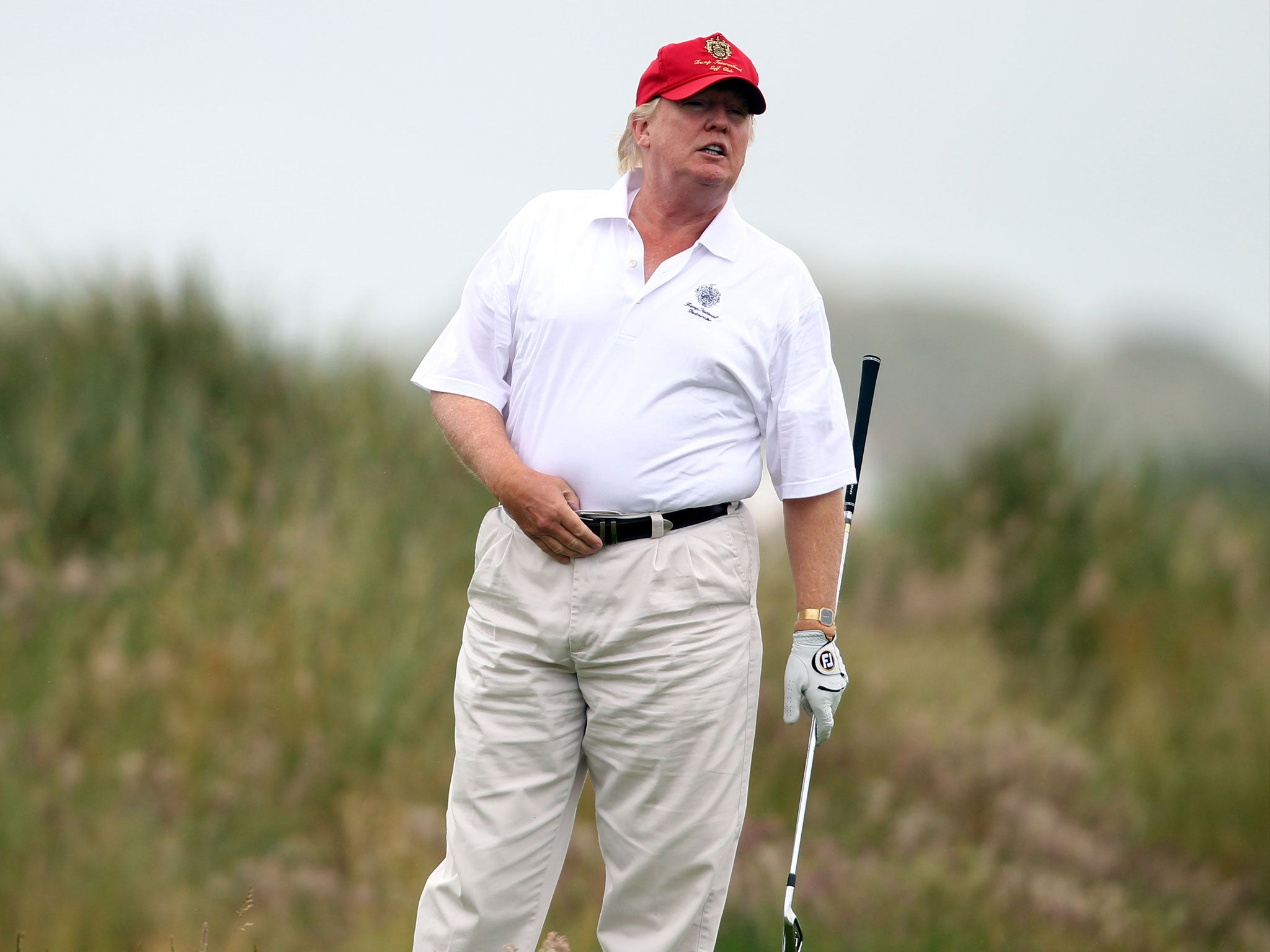
This is the POTUS, and he’s focused on himself. Not everything Trump has done is bad; some attempt to address Hurricane Florence is better than none and he was rooting for his fellow Americans, but we should expect  more selflessness from our leader. Trump has a big role to play and his narcissism isn’t allowing him to play it. Dr. Nigel Barber writes that, “[Narcissists] do not feel the need to build consensus, which is why most are screened out by democratic systems of government.”


One person that I’ve met who has shown a lot of signs for NPD was a coworker who we will name Paul. Paul knew all the best stuff, the best singer, the best artist, the best movie director, and they were all his favorites simply because they were the best. Mariah Carey could hit the highest notes so she was the best singer. Kanye West was the best artist because he could produce, write, and rap. Paul loved Kanye West and said that “Kanye is just misunderstood. He’s on such level that you can’t understand.” In context, this was me telling Paul I don’t like Kanye and his response was basically, I am an idiot. And who did Paul vote for. Donald Trump, yessir. Paul wants the wall to be built, doesn’t see Trump as a racist, and would argue with you until closing time that he was right. He was extremely difficult to work with. Part of the blame is him, but part of the blame is on the people he looks up to. If we allow people like Donald Trump to run our country while he’s playing golf, we are setting an extremely bad example for our country. Kanye West should not be what kids look up to. Progression isn’t going to happen if we’re all focused on is us. Paul wasn’t all bad though, he did have empathy for others, which is significantly different than most narcissists. Oprah Winfrey cares about her audience and feminism, but she does let herself get in the way of what she’s trying to create here and there. Narcissistic Personality Disorder has multiple possible symptoms, and not everyone portrays the same symptoms. Out of nine symptoms, you need five. The more celebrities we see with NPD, the more it seems normal. The people who are considered above us should portray positive qualities for us to look up to. This way, we can move forward as a society and stop focusing so much on ourselves. I’d like to leave you with one of my favorite Kanye West quotes I read while researching this paper. For context, West is responding on his blog to Entertainment Weekly’s grade on one of his concerts. What’s a B+ mean? I’m an extremist, its either pass or fail! A+ or F-! You know what, f**k you and the whole f*****g staff!”

References

1, BBC Radio. YouTube, YouTube, 23 Sept. 2013, http://www.youtube.com/watch?v=K2T0fMkZoMo.

Barber, Nigel. “Does Trump Suffer from Narcissistic Personality Disorder?” Psychology Today,

Sussex Publishers, 10 Aug. 2016,

http://www.psychologytoday.com/us/blog/the-human-beast/201608/does-trump-suffer-narcissistic-personality-disorder.

Cichminski, Lucille, and Tamara Bellomo. “Narcissistic Personality Disorder: When It’s All

about ‘Me’ : Nursing Made Incredibly Easy.” LWW, Jan. 2016, journals.lww.com/nursingmadeincrediblyeasy/fulltext/2016/01000/Narcissistic_personality_disorder__When_it_s_all.9.aspx.

Colvin, Jill. “Trump Visit to US Cemetery in France Canceled Due to Rain.” AP News,

Associated Press, 11 Nov. 2018, http://www.apnews.com/52462add34fd45ecb16319b564045d61.

Elkins, Kathleen. “From Poverty to a $3 Billion Fortune – the Incredible Rags-to-Riches Story of

Oprah Winfrey.” Business Insider, Business Insider, 28 May 2015, http://www.businessinsider.com/rags-to-riches-story-of-oprah-winfrey-2015-5.

Gluck, Samantha. “Famous People with Narcissistic Personality Disorder.” HealthyPlace,

Healthy Place, 5 Dec. 2014,

https://www.healthyplace.com/personality-disorders/narcissistic-personality-disorder/famous-people-with-narcissistic-personality-disorder

Hall-Flavin, Daniel K. “Narcissistic Personality Disorder.” Mayo Clinic, Mayo Foundation for

Medical Education and Research, 18 Nov. 2017, https://www.mayoclinic.org/diseases-conditions/narcissistic-personality-disorder/symptoms-causes/syc-20366662

Kessler, Glenn. “Have U.S. Taxpayers Spent $72 Million on Trump’s Golf Outings?” The

Washington Post, WP Company, 27 July 2018, http://www.washingtonpost.com/news/fact-checker/wp/2018/07/27/have-u-s-taxpayers-spent-72-million-on-trumps-golf-outings/?utm_term=.0340c74fed38.

Kitson, Rachel. “A Psychologist’s Perspective on Kanye West.” Shrink Tank, 12 Oct. 2018,

http://www.shrinktank.com/psychologists-perspective-kanye-west/.

Kluger, Jeffrey. “Kanye West and Disabled Audience Members.” Time, Time, 15 Sept. 2014,

time.com/3377739/kanye-west-narcissist/.  

McMillan, Graeme. “While You Were Offline: One of the Wettest Weeks From the Standpoint of

Water.” Wired, Conde Nast, 22 Sept. 2018, http://www.wired.com/story/internet-week-188/.

Milbank, Dana. “The Trump Convention Is a Triumph of Narcissism.” The Washington Post, WP

Company, 19 July 2016, http://www.washingtonpost.com/opinions/the-trump-convention-is-a-triumph-of-narcissism/2016/07/19/6391e5cc-4df0-11e6-a7d8-13d06b37f256_story.html?utm_term=.eddcce0f2278

Parikh, Rahul K. “Oprah’s Bad Medicine.” Salon, Salon.com, 15 May 2009,

http://www.salon.com/2009/05/15/oprah_winfrey_health/.

Saad, Gad. “The Narcissism and Grandiosity of Celebrities.” Psychology Today, Sussex

Publishers, 15 June 2009,

http://www.psychologytoday.com/us/blog/homo-consumericus/200906/the-narcissism-and-grandiosity-celebrities.

Shapiro, Emily. “The History Behind the Donald Trump ‘Small Hands’ Insult.” ABC News, ABC

News Network, 4 Mar. 2016, abcnews.go.com/Politics/history-donald-trump-small-hands-insult/story?id=37395515.

Group Projects

When I first heard that we were assigned a group project, I was terrified. Just more homework added to my list, and more than half of our group was gone the first day. Nothing got done, I got stressed, I became apathetic, but things really fell into place once we had a full group. Ivan was the one who threw out the game show idea and all of us jumped on to it. None of us were passionate about pollution. I just threw it out and we all shook our heads yes. As I said, things fell into place. We found a pre-made Jeopardy board on Google Docs, and we each took a certain type of pollution, researched it, and came up with questions. If I remember correctly, Ivan had “Space,” Denise had “Water,” Monica had “Air,” Ruty had “Land/Soil,” and I had “Noise.” It all came together very quickly and painlessly. The actual part of putting the game show together was difficult. Ivan came up with the idea of cardboard planets, pollution portals, and all the extra stuff added to the game. It was really cool and unique and I’m glad that we settled on those ideas. Some of the original ideas he had were far too complicated and I thought we were biting off way more than we chew. Assigning roles was really simple. Ivan and Ruty were more than happy to be Host and Co-Host. I don’t know about Monica and Denise, but I enjoyed just hanging out in the back, not talking, writing things down and putting things up. Compared to other presentations, I wasn’t nervous about this one. When we went up, I knew exactly what was going to happen, and that people were going to like it. Our Jeopardy really wasn’t Jeopardy, it was easy-mode Jeopardy. Without the multiple choice, each team would’ve died instantly. The variety of questions helped too. The water, soil and air questions are serious and should be our focus for saving the planet, but the space and noise categories were there to help keep things light. People liked my chicken question, so mission accomplished. Working with the four people I did was great, they all pulled their own weight and contributed to our final project. It would’ve been nice to have had the other three the first day, but it’s over now. Oh well. If given more time, we may have made it worse. Ivan’s first idea was to pour polluted water into this see-through cups every time you got a question wrong, and their would be lines on the side of the cup that represented how many lives you had left. I’m glad we went with the one we did. I could only imagine making that polluted stuff and then accidentally spilling it. We never had to meet outside of class. We even had spare time on the final day of preparation. Overall, this was a really awesome group project that surprised me by how well it all came together.

All the groups were entertaining. It was fun to sit and play the “Garbage Chutes and Sustainable Ladders” game. I had no idea what the Paris Agreement was before then. That one kid to the right of me had real bad luck with his cards. Stuck between like 5 spots. It was ruthless, but the game was nice and informational. The Instagram interview group had some really neat stories. I wish Portland State University had their own version of “Humans of New York.” It seemed to be beneficial to some of the members too in that, they learned more about their friend or their partner in a way they never would’ve thought. Maybe it was their one and only opportunity to do so. It was eye-opening to me and makes me want to not be someone who has these stereotypes on certain races. Everyone should be comfortable in their own skin, no matter what color, and without being pointed at and stared at. That Nike Shoe Box game was bananas. I loved everything about it. My family plays a less-physical version of it around Christmas time and it’s so much fun to get your blood pumping and adrenaline rushing. It was a blast to watch the people playing get competitive all for a jolly rancher. There was one guy who would politely stick his hand out for the pen rather than snatch it, which I thought was hilarious. And in the end, they got a little exercise. Ten out of ten game. The other Jeopardy clone was impossible. Those questions were tough and so sad too. Every time a shelter question would come up, my heart sank further and further. The candy made it all the more competitive too. So many “Oh!’s” and “Wooh!’s” were shouted it was hysterical. As the group said, Jeopardy is hard so I can’t complain too much, but after 3 rounds, only 4 questions were answered correctly. It’s a little ridiculous. That final board game was top notch. The artist did an incredible job, and I have a lot of respect for this game and this group. Sex-ed is a touchy subject for me, and I’m glad that someone is trying to teach it in a unique way. I think Georgette put it best with, “This game is fun, silly, and educational, but kids won’t think it’s stupid.” It had just the right balance of fun, education and coolness and it was incredibly successful. It could even be successful as a legit board game sold in stores. I’m glad the final project of presentations was the rap. It was a nice change of pace and kept things fresh. Thematically appropriate to. Rap was incredibly important to the West Coast because it gave Black People a voice. It gave them a podium to stand on and tell their side of the story. Their social issue and medium was a complete call back to artists like N.W.A. and 2Pac who needed that. It was awesome that one of the members was also experienced in their medium so their final product sounded very professional. It was a perfect way to end an awesome class.

Games for Change

The prompt for this blog post says that we need to discuss one of the games that we played from Games for Change Organization. I, unfortunately, was not there to partake in one of the board games or online games. From what other students had told me, the ideas of these games is to get people involved in some sort of social issue while playing this fun game or to educate about a certain subject. There was the example of a phone app where you got points for finding defibrillators in your area and posted it to the game. Then you would compete on leaderboards. Another example is creating a board game that asks you questions about recycle to help promote proper recycling. The group I was in came up with the idea for a phone-app that gave you points based off finding cans and newspapers in the street and bringing them to specific spots in the city to exchange these recyclable items for game points. The name of it is was “GoRe” which stood for go recycle. I think the idea of using board games and phone apps to promote positive changes in society is something that should be heavily invested in. I’ve learned more from Kahoot than I did from a textbooks and there are others who would agree with me. This is fun learning. Of course it isn’t everyones cup of teas. Not everyone is competitive nor likes games, but this still reaches a large demographic of people are into this stuff. It’s interesting, fun, and will hopefully make positive changes.

The variety in games we have today is quite the plethora. With games becoming easier and easier to produce, just about anybody can do it. We have an entire genre of games dedicated to people who do game-making as a hobby with the hopes of making it big. This allows for games with a goal of social justice to be made relatively easily. I like the idea of free rice. I remember playing it back in grade school and my friends and I would get into competitions over who could send the most rice or get the highest streak. It’s a winning situation in the sense that fun was had, I was practicing math, and someone who really needed food was getting it. Rice isn’t much but it’s better than nothing. Citizen Logistics is a great idea, and a lot of trust needs to go into it for it to work. You’re giving out your location to strangers in the hopes that they’ll come find you and bring you the thing you need/want. On paper, it’s beautiful, but in practice, it could be really messy.

I wish I had a chance to play those games that were available on Tuesday. I love games and can be very competitive. A product like this would be perfect for someone like me. I hope more projects like this pop-up because this could lead to something big and create some incredible change.

Princess Mononoke: Still Relevant After All These Years

The year was 1997. A movie with a powerful message was released to the world called “Princess Mononoke.” Environment and how the humans are killing was its message. War is around every corner. Humankind and Nature cannot coexist. It was a really entertaining movie to watch that had a lasting effect with me. There were some parts that made my head turn in confusion, like when San began sucking out the blood of her wolf mother when she was shot. All is explained in the end though, which is great. A film that makes you question things and also gives you those answers makes for an engaging movie, and “Princess Mononoke” did a great of it. There were some beautiful drawings too, always of nature though. This was most likely done to help sway the watcher to the nature side of the battle. The anime aspect was a neat touch, but I think it was a bit much at times. I’m not talking about the mouths not lining up with the voices, but the sound effects were goofy at times. They especially stuck out when, spoiler alert, Okkoto and Moro die and their bodies collapse. It didn’t feel natural, the sound effects, and it didn’t send the emotions home that they were intending. They drawing style did make for some comedic relief moments. Watching cartoon men in thick armor have their head come clean off, it’s goofy and helps relieve the tension.

The article about “Princess Mononoke” was like an introduction to the film. It gave a brief summary of it and its intentions with a brief history of the film and its impact. The author also made connections from the movie to topical subjects such as President Donald Trump and pulling out of the Paris Treaty. I agree with Erica. I think the movie is still relevant today in every shape and form. There’s constant worry about the rainforest and its deforestation. With a growing population, the humans are going to push into the animals’ habitat. It’s a shame we don’t have more immediate backlash like they did in the film. We don’t have giant boars or wolves to fight back against us. There’s no Deer God that gives and takes life. There’s nothing that strong to wake some sense into us and make us care more. That’s why us as humans need to look ahead and plan out the future. Rainforests don’t pop up in a day, and animals need a place to live. It is our responsibility to take care of Mother Earth. All the other animals do their part, and we are really slacking. We use up the most of what nature gives us, and we don’t give back enough what so ever.

Princess Mononoke has aged well, and that’s not good. Its message still stands strong today, maybe even worse than before. It’s been 20 years. We need to take care of our planet in anyway possible. It won’t last forever, but we can try and make it last as long as possible by simply giving a damn about the environment.

Diverse-Superhero Comics

The two comics that I read was Kamala Khan Ms. Marvel: No Normal and Spider-Man: Miles Morales. Each were very similar. Going into each comic, I expected there to be a lot of talk about race, social issues, and diversity due to the discussions we were having in class. There were mentions of those subjects in each comic, Kamala dealing with people assuming she can’t go to parties because of her religion and Miles arguing with his Asian friend over who had it worse. Those weren’t the comics main focus though. They were focused on identity for each person. Those two superheroes are high-schoolers; they’re still trying to find themselves. Kamala constantly struggles with her religion and her mother. Family is a big part in each comic too. They’re worried about their respective child because of their secretiveness. Miles’ Dad is the only one who knows about his secret and understands the responsibility that has been placed on his son. Balance is a huge theme. Each trying to balance being heroes, students, having a social-life. I like the “realisticness” of Kamala Khan because when she first gets her powers, she doesn’t have immediate control of them. They’re crazy and all over the place and over time she learns to control it. It’s a great touch of reality in this fantasy world. Plus, she’s funny.

Hearing about Faith in class versus reading about her is two completely different stories. From the article, she’s the prime example of a plus-size superhero because she has a double-chin, a rounded out personality, and embraces her body with love. The writer purposefully stepped away from any fat jokes to avoid giving off the wrong tone. Hearing about the character in class though, she was very disappointing. She had all those qualities with no fat jokes being made, but she was still a joke. She wasn’t that impressive of a superhero. She wasn’t doing anything that dangerous, she wasn’t saving a school bus of kids or the POTUS, she was saving puppies, which was disappointing. Overall the book was meant for little kids, which I think is okay, because it’s probably younger kids that are most insecure about their bodies, especially with it constantly changing. So to have someone for those little changing youngsters to look up to is awesome.

Creating diverse characters reaches out to a larger audience and when it happens naturally, people get excited and good is created. When it’s done out of fear or competition, part of that good is gone. Imagining that DC and Marvel only created characters like Wonder Woman, Black Panther, Ms. Marvel, and John Stewart out of a competition to appear diverse in the public eye is upsetting. Do I think they should be aware if they are diverse or not, yes. I think they should create characters of all races, genders, sexualities, but do it out of goodness, and not out of winning some game, but that’s Hollywood sometimes.

The 99 was a good read. It’s what you expect from an origin tale, lore, progress, and introduction to unique characters. It’s a shame that the project had to be canceled. I think it would’ve been a unique way to explore something that isn’t explored quite often. It would come with a nasty cost of offending a huge group of people. Maybe one day we’ll get something like The 99.

Works Cited

Baker-Whitelaw, Gavia. “In the DC vs. Marvel Diversity Arms Race, White Guys Are Still Winning.” The Daily Dot, 9 Mar. 2017, http://www.dailydot.com/parsec/dc-vs-marvel-diversity/.

Bendis, Brian Michael, et al. Spider-Man: Miles Morales. Marvel Comics, 2017.

Dodson, P. Claire. “Meet Faith, the Superhero Comic-Book Fans Deserve.” The Atlantic, Atlantic Media Company, 15 Apr. 2016, http://www.theatlantic.com/entertainment/archive/2016/04/faith/478386/.

Wilson, G. Willow, et al. Ms. Marvel. Hachette Partworks Ltd, 2017.

Persepolis, March, and Journalism

Learning about war through a graphic novel was one of the best ways to learn. I couldn’t put Persepolis down, it had such a unique flow from one chapter to the next. The way she ended each chapter wasn’t a usual ending. There wasn’t a cliff hanger to keep you reading, or anything particularly interesting; it summed up the chapter. This really stuck with me because it was nice, this melancholy feeling admits all the stress of the war is a nice touch. That’s what helped keep me wanting to read, this constant rollercoaster of stress. It was nicely controlled. March #3 was harder for me to read, and most of the people in my group preferred March over Persepolis. One guy said that he liked the creative use of panel in March because it wasn’t always the same, and words were flying out of the panels, linking to others and showing you the path of reading. March 3 was very interesting to look at. The illustrations were incredible, and the placement of words and panels were awesome. The choices made for it were wonderful. I’m not sure why it didn’t stick with me; there were points where I was lost in the advanced vocabulary used by Malcolm X and Dr. King, but it wasn’t that full of it. The aesthetic of plain cartoony drawings used in Persepolis is something I prefer. The article “Comic Studies: ‘Persepolis’ and ‘Fun Home'” talked about “amplification through simplification” (McCloud) which is clearly seen in Persepolis. The issues in it are heavy, and the cartoony look lightens it up, which helps you read it. It could’ve been much more defined and in turn more graphic.

“How Comics Journalism Brings Stories To Life” was like an introduction to Joe Sacco and what he was trying to achieve it. Without this medium, the people he interviewed wouldn’t have had an effective voice without a face to match it. The face brings humanity to their words and makes readers care more because of compassion. I read Kushinagar and this is especially true because more than half of the interviews are from the suffering. The illustrations allow you to see the their sunken in faces, the skinny and weak legs, and then the ones suppressing them with their big full stomachs and easy life styles. I like it because I don’t like to read. The illustration takes away all that reading to describe how someone looks and what ind of setting they’re in. It’s just dialogue and commentary. That’s all right with me.

Absolute hot or cool media is a bad idea. If you force fed everyone the information, it wouldn’t stick with them, and if you made people work for it, no one would give the effort. A balance of both is needed for people to give effort and to have it stick. It was difficult to find an article on my Journalism topic since it was such an “unheard of” “uncared for” topic. The one I found sort of touched on the caste system and how there aren’t enough jobs to go around, but also focused a good deal on Buddha. I think comics are good way for news to be distributed. It keeps peoples attention, gets the information to stick, and with the right style, it won’t be as heavy, which could be good or bad. Maddaya Mom was most successful because of the illustrations that brought a face to the issue. That seemed to be its entire purpose. ABC News collaborating with Marvel Comics was surprising but it shows that people are becoming more open to comics. It’s no longer for “nerds,” it can be for those who want to know about current events.

Works Cited

SACCO, JOE. JOURNALISM. JONATHAN CAPE LTD, 2018.

Satrapi, Marjane. Persepolis. Pantheon, 2004.

Sneddon, Laura. “Comic Studies: ‘Persepolis’ and ‘Fun Home.’” CBR, 11 Aug. 2016, http://www.cbr.com/comic-studies-persepolis-and-fun-home/.

The Impact of Psycho and Hitchcock

There was a lot of documentaries to chose from on Hulu. Lots on political issues, social issues and musical icons, but the one that I chose was “78/52: Hitchcock’s Shower Scene.” What’s interesting about it is all of the other documentaries were around an hour long; this one was an hour and a half. In my head, I thought, “There’s more to be said about a movie scene that lasted two minutes than all the religions in the world. Interesting.” I started off pretty skeptical. As the movie rolled on, I continued to be skeptical. The documentary was so long because there was a lot of people giving their different thoughts on Psycho and other Hitchcock related things. There was famous directors, actors, family members of the people who made psycho, and even people who worked with Hitchcock back in the day. At first I thought, this is too man people. I can’t keep track of them and their opinions, but eventually I started to keep up and even anticipate what someone was going to say based off of their last shot. Most of the actors were cracking jokes, and the directors were explaining the directing and shooting techniques that Hitchcock used. It turned out to be really entertaining. There was a lot to say about a two minute scene, and it was an important movie scene.

All of the interviews for the documentary were in black and white. It had spooky orchestral music playing in the background, just like an Alfred Hitchcock movie. All the interviewees were watching the movie on an old-fashioned TV which was all for aesthetic purposes, but it helped the impact of this movie. A lot of what I heard was Psycho was a movie like no other. There was nothing so suspenseful, bloody, and deranged in an A movie like that. Some argued that it was the first time a toilet had been shown on the screen. Hitchcock was constantly pushing the envelope on censorship. Every once in a while, you’ll hear a negative comment about the movie. There was a lot about the way the movie was cut together, how there was a feeling of disorientation. Other people were into the disorientation and praised the cuts. There was bias in the film, but I can imagine that it’s hard to find someone who doesn’t like Psycho in one way or another.

This really pushed a lot of boundaries. You weren’t allowed to show a woman’s stomach before the movie. Using a knife as a way of murder was something else that caught people’s eye. Before it was strangling, nothing so violent. Deaths were quick, they didn’t last two minutes. It lead to social change. Slasher films could be nonexistent without this scene. It allowed for more creative freedom. If any of this doesn’t make sense, I highly recommend watching that scene on YouTube. I wasn’t very into the documentary for bits and pieces of it. Whether it was the amount of interviews they had, or that I’m not a big movie buff, I’m not sure. I feel like what was said in an hour and a half could’ve been slimmed down by a few 10-minute margins.

Sweatshop: Deadly Fashion had very bad storytellers with an interesting story. The three kids they had host were annoying know-it-alls and were quite rude at times. The questions they asked the workers during the scene where they didn’t their faces I thought was insulting. The male host getting a tattoo of the social movement I thought was really cringe and lame. He should’ve just given that money to someone who needed it. I get why those three were chosen. They were popular in the fashion world, and I’m glad that the two females continue to be activists for the sweatshop workers. Where is the guy though?

I had never seen Parts Unknown but had heard great things about it. Those great things were true. Anthony Bourdain was genuinely interested in both the food, the culture, and the people he was interviewing. He was brave to talk to the social-movement musician leader. He was respectful, and did his best to keep his manners, even when the lady at the musician hangout spot called him out. I really enjoyed it, and would probably enjoy more episodes based around culture than cooking.

Works Cited

Phillipe, Alexander O, director. 78/52: Hitchcock’s Shower Scene. Hulu, 13 Oct. 2017.

The Guy That Writes These Blog Posts

Hello! My name is Nick. I’m pretty well known for having some crazy long blonde hair (look at photo below for further information on what I look like).Photo on 10-5-18 at 3.46 PMUpon first glance, you’re probably thinking, oh boy, another stoner hippie beanie-wearing s.o.b. from Portland that took one government class and thinks he knows everything. Well, you’re close. I’m actually from Boise, Idaho, and I’m even more confused about government after that class, but I still know everything. One thing I know very well is music. I consume it on a daily basis, both contemporary and oldies. It’s one of the biggest forms of pop culture I endure. My listening habits usually go like this. Find a new artist through Tiny Desk, friends, or some Spotify playlist, listen to nothing but them for either a week, a month or two, and either drop them or add them to my collection of other bands that I like. I’ve found a wide range of bands this way from genres of funk and jazz, to punk and rap. I engage in music so much because it’s one of the few things in this world that makes sense to me. There’s a millions to create music, and they all bring people together. That’s how I found a huge majority of my closest friends. In the world of music advertising is a small portion of why I listen to new music. The only time it’s affective is when some band I like is about to drop a new album or Record Store Day is around the corner and a store put out a list of what’ll be available.

In other forms though, advertising is very affective on me. I wouldn’t know about any movies coming out if it weren’t for trailers. I’ve eaten so much McDonald’s since the 2 for 5 deal came out. It stills fall back on friends telling me about stuff though; word of mouth is the most affective. Friends telling me what restaurants have the best burgers or that I need to see these classic movies. When certain companies get political, I also get biased. One of the most recent ones is Nike with their Colin Kaepernick advertisement. I wanted to buy more Nike gear because they supported an issue that I agree with. Chick-Fil-A and their homophobic business choices made me boycott Chick-Fil-A (Israel). I don’t want to support a company that supports something I disagree with. I try to be conscious of those sort of things. Of course I could be completely unaware of a company’s political stance.

As someone who wishes to be in the media business playing music, I support advertising. It’s a good way for businesses to attract customers. People also do good with advertising. Colgate did a commercial solely focusing on wasting water, and they put their name at the very end of it which showed for a mere 3 seconds in a 30-second advertisement (WSJDigitalNetwork). Commercials and advertising are a big part of capitalism which is what built America. I agree that capitalism has some issues that need to be addressed, like I think monopolies are a bad idea for the economy but that’s for another paper.

The Greatest Movie Ever Sold was meant to bring some transparency to Hollywood. It was made for us, the consumer. We are considered to be living in a consumer culture. Whether or not the movie was portraying it as bad or good, it wasn’t doing one or the other. It was unbiased and left the feelings up to the watcher. I don’t think living in a consumer culture is bad. What is bad is not being told that’s the kind of world you live in. As I said before, I like choices. Seeing Morgan Spurlock sell away his rights to choices in the movie was a little upsetting to me. That was the point of the movie, to make you feel something.

After reading Introducing Popular Culture, my feelings didn’t shift. It laid out what popular culture was, breaking it down piece by piece and bringing it back with certain strategies that people use to control popular culture. I buy into popular culture and subcultures all the time. I have a very punk/90’s style. I like to coffee when I’m talking with people because it keeps me talkative. The coffee argument in the paper was interesting. I had this initial feeling of, “Oh god,” but I slowly started to agree with what the paper was saying. Coffee does stand for something more than its physical form. It can also be associated with conversation or people losing their minds over red holiday cups.

Popular culture is something that we can’t escape. It’s everywhere. I consume it through music and commercials. It’s something that can be used for good, or bad. What I love most though is choice. If I don’t want to buy something I don’t have to. If it’s big, shiny, and would make my life easier, I don’t have to get it. I think once choice is taken away, problems will arise. America isn’t one-size-fits-all. We’re a melting pot of so many different cultures. And when cultures come together and make a fusion stew of beautiful different music, well that’s what I want to listen to. That’s what I want to consume from pop culture.


Works Cited

Israel, Josh. “Chick-Fil-A Is Still Bankrolling Anti-LGBTQ Causes.” ThinkProgress, ThinkProgress, 6 July 2017, thinkprogress.org/chick-fil-a-still-anti-gay-970f079bf85/.

WSJDigitalNetwork. YouTube, YouTube, 27 Jan. 2016, http://www.youtube.com/watch?v=IS4lGnGfHTw.